
Queue Management System in Saudi Arabia: A 2026 Buyer’s Guide
Long lines cost businesses money and patience. A modern queue management system in Saudi Arabia turns chaotic waiting rooms into orderly, measurable customer journeys. Whether you run a bank branch in Riyadh, a hospital in Jeddah, or a government service center in Dammam, the right platform trims wait times, lifts staff productivity, and gives managers real numbers to act on. In 2026, this technology has become a baseline expectation rather than a luxury.
Saudi Arabia’s Vision 2030 push toward digital government and world-class customer experience has accelerated adoption across public and private sectors. This guide breaks down how these systems work, what to look for, and how to compare vendors before you sign.
What Is a Queue Management System and How Does It Work?
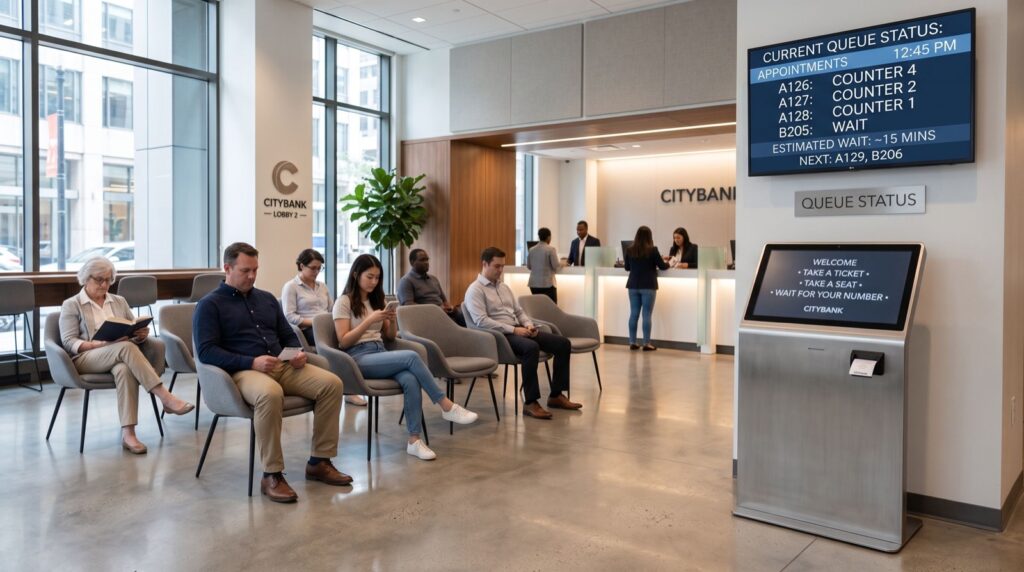
At its core, a queue management platform organizes the flow of visitors from arrival to service. Customers take a virtual or printed ticket, wait comfortably, and get called to the right counter when an agent is free. Behind the scenes, the software tracks every step and feeds analytics back to supervisors.
A complete deployment usually combines several layers:
- Ticketing kiosk or mobile check-in — customers select the service they need.
- Digital signage and displays — screens show ticket numbers and counter assignments.
- Counter software — agents call, transfer, or recall visitors with one click.
- Analytics dashboard — managers monitor wait times, service times, and peak hours in real time.
- SMS and app notifications — visitors leave the branch and return when their turn nears.
Many organizations pair queuing with adjacent technologies. Fast-service venues, for example, often integrate ordering points and Drive-thru Systems in Saudi Arabia to keep both indoor and curbside customers moving without friction.
Why a Queue Management System in Saudi Arabia Matters in 2026
The Kingdom’s service sector is expanding fast, and customer expectations have risen with it. Shoppers, patients, and citizens now compare their local experience against the smooth digital journeys they see globally. A slow line damages brand trust in minutes.
Measurable business benefits
- Shorter perceived wait times — virtual queuing lets people sit, shop, or step outside instead of standing in place.
- Higher staff efficiency — automated routing sends each visitor to the correct desk the first time.
- Data-driven staffing — historical peaks guide smarter shift planning.
- Better compliance and fairness — first-in, first-out logic removes disputes over “who was next.”
- Multilingual service — Arabic and English interfaces suit the Kingdom’s diverse workforce and visitors.
According to the International Telecommunication Union, digital service infrastructure across the Gulf region continues to grow rapidly, and queuing platforms sit squarely inside that modernization wave.
Key Features to Compare Before You Buy
Not every platform fits every branch. Focus your evaluation on features that map to your actual traffic patterns and compliance needs. Working with dependable specialists during procurement helps you avoid over-buying hardware you will never use.
| Feature | Basic Tier | Enterprise Tier |
|---|---|---|
| Ticketing kiosks | 1–2 units | Unlimited, multi-branch |
| Mobile / virtual queuing | Optional add-on | Built-in with app + SMS |
| Real-time analytics | Daily reports | Live dashboards + API |
| Arabic/English UI | Yes | Yes + RTL support |
| Appointment booking | No | Integrated scheduling |
| Central management | Single site | Cross-branch cloud |
Integration and scalability
Choose a system that talks to your existing CRM, ERP, or hospital information system through open APIs. A cloud-first architecture lets you add branches without rebuilding from scratch, which matters as your footprint grows across the Kingdom.
Which Industries Benefit Most?
Almost any organization with a front desk gains from structured queuing. In Saudi Arabia, the strongest returns show up in:
- Banking and finance — routing customers to tellers, advisors, and business desks.
- Healthcare — separating triage, pharmacy, and lab flows.
- Government service centers — handling high volumes under Vision 2030 e-services goals.
- Telecom stores — managing SIM activation, billing, and device support lines.
- Retail and quick service — blending in-store pickup with curbside lanes.
Businesses that combine queuing with a queue management system in saudi arabia tailored to their branch layout consistently report smoother peak-hour operations and fewer walkaways.
Implementation Roadmap: From Pilot to Rollout
A disciplined rollout protects your budget and your staff’s confidence. Follow a phased approach:
- Audit current flow — map arrivals, service types, and bottlenecks at one busy branch.
- Run a pilot — deploy one kiosk and dashboard, then measure real wait-time deltas.
- Train the team — agents learn calling, transfers, and recall in under an hour.
- Scale by branch — replicate the proven setup across locations.
- Review monthly — use analytics to refine staffing and service categories.
Practical tip: insist on a two-week live pilot with your own customers before committing to a multi-branch contract. Real traffic reveals whether the vendor’s promised wait-time reductions actually hold up under your peak load.
Measuring success after go-live
Once your system is running, track a small set of metrics to prove its value. Average wait time is the headline figure customers feel most directly. Abandonment rate — the share of visitors who leave before service — is often the most revealing, because a visible drop translates straight into recovered revenue. Peak-hour throughput and average service time round out the picture and guide smarter staffing decisions.
Review these numbers monthly. In our experience deploying these platforms, the branches that revisit their dashboards regularly outperform those that install the hardware and forget about it. Data only helps when someone acts on it.
Frequently Asked Questions
How much does a queue management system in Saudi Arabia cost?
Pricing depends on branch count, hardware, and whether you choose cloud or on-premise. Small single-branch setups start modestly, while enterprise deployments with analytics and mobile queuing scale with the number of counters and locations. Ask for a transparent per-branch quote.
Can it support both Arabic and English?
Yes. Reputable systems ship with full Arabic and English interfaces, including right-to-left layout on kiosks, displays, and mobile check-in. This dual-language support is essential for the Kingdom’s diverse customer base.
Does it integrate with appointment booking?
Enterprise tiers combine walk-in queuing with online appointment scheduling, so booked visitors merge smoothly into the live queue. This hybrid model reduces crowding and gives customers more control over their time.
How quickly can we see results?
Most branches notice shorter perceived wait times within the first week of a pilot. Full staffing and service-category optimization typically shows measurable gains within the first two months of analytics review.
Conclusion and Next Steps
A well-chosen queue management system in Saudi Arabia is one of the highest-return upgrades a customer-facing business can make in 2026. It shortens waits, sharpens staffing, and turns everyday foot traffic into actionable data. Start with a single-branch pilot, measure honestly, and scale what works.
Ready to cut your lines and lift satisfaction scores? Compare vendors, request a live demo, and book a pilot this quarter — your customers will feel the difference on their very next visit.